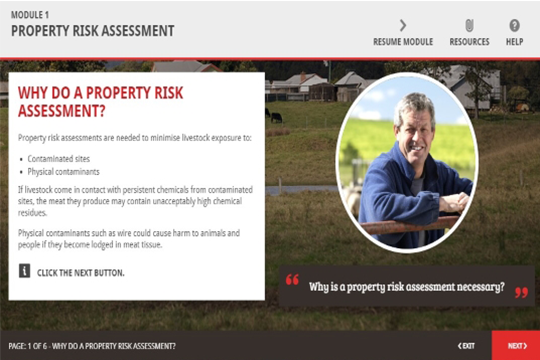
LPA Learning
Consolidate your knowledge on ‘Property Risk Assessment’ by completing this LPA Learning module.
You must identify any possible risk on your property where livestock could be exposed to sites or sources of unacceptable contamination from persistent chemicals, pathogens from recycled water or physical contaminants and develop strategies for how this risk will be controlled.
To ensure you are controlling the risk of contaminated product entering the food chain, livestock owners must:
Access ISC’s detailed step-by-step guide to creating and uploading documents to your LPA account to learn how to complete your digital property risk assessments.
Guide to creating or uploading documents to your LPA account
Property risk assessments ensure the integrity of the meat we produce, guaranteeing it's safe and of high quality.
If livestock encounter persistent chemicals, the meat produced may contain unacceptably high chemical residues, impacting on food safety and market access. Similarly, physical contaminants such as wire could cause harm to animals and people if they become lodged in meat tissue.
There is also a risk of cattle developing a disease called beef measles (Cysticercus bovis or C. bovis) if they are exposed to inadequately treated recycled water. C. bovis is a food safety risk to humans and infected carcases can be partly or fully condemned at processing if infected.
Repercussions of selling livestock that are chemically, physically or biologically contaminated, may not being paid for the livestock, and possible legal liability for the resulting costs faced by processors and the rest of the supply chain.
Consolidate your knowledge on ‘Property Risk Assessment’ by completing this LPA Learning module.
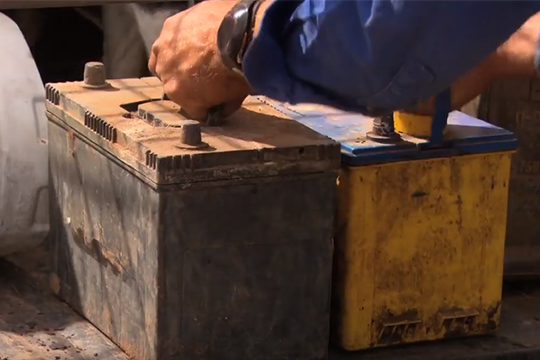
Watch this video to understand how to minimise risk on-farm from persistent chemicals and physical contaminants.
No. LPA does not prohibit or restrict the installation of equipment including solar panels, electrical transformers, capacitors, hydraulic equipment, coal seam gas structures or wind turbines on land which is also used for livestock production and grazing.
For more information please read this guide: Renewable Energy Infrastructure on Livestock Properties
A map of the property identifying any contamination risks. It can also be used to for biosecurity risk management.
The location of old batteries, old dip sites, farm rubbish tips, old painted timbers, commercial painted surfaces, machinery, chemical storage or disposal areas, land treated with recycled water and land which shares a boundary with public land (e.g., roadways. railways. state forest. national park) should be highlighted on the map.
This will ensure a livestock producer is doing all they can to prevent livestock becoming contaminated and ensure the resulting meat they produce is safe to eat.
Animals that may have been exposed to physical contaminants such as broken needles, buckshot or wire need to be identified and this information must be shared with the buyer. You will need to keep records of animals that may have been exposed to these contaminants.
Read more about LPA livestock transactions and movements.
Persistent chemicals break down very slowly. Areas contaminated with persistent chemicals may have to be managed for decades, depending on the chemical involved, climate and soil type. Lead, arsenic and cadmium do not breakdown, although their levels may reduce over time as a result of dilution or leaching.
Recycled water refers to water recycled from sewage or other water sources containing human faecal material and supplied from a wastewater treatment plant under an agreement. This excludes on-farm household greywater and septic systems or stormwater. The use or accidental exposure of cattle to inadequately treated recycled water needs to be managed to minimise the risk of beef measles (C. bovis) infection in cattle. C. bovis poses a food safety risk to humans and infected carcases can be partly or fully condemned at processing if infected.
If you are being supplied with recycled water from a wastewater treatment plant, you need to:
If cattle are exposed to inadequately treated recycled water, they need to be identified, traceable and declared as exposed to C. bovis on outgoing NVDs.