Search tips
- Check your spelling
- Try a different term
- Keep your search term short and simple
Managing your ISC accounts when you have multiple PICs
If you receive a loss of LT warning when livestock are transferred onto your PIC, it means animals were not registered to the property (PIC) you bought or received them from. Most likely, you received Warning 21A to your email account if this is the case.
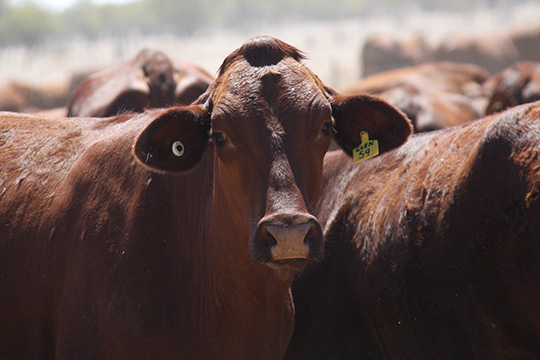
If you’re new to owning livestock or only have a handful of cattle, sheep or goats on your property, this webinar is for you! Join Integrity Systems Company for a high-level overview of property identification codes (PIC), biosecurity requirements, livestock movements, and ISC and state department requirements. This webinar is relevant to hobby farmers and small landholders across Australia. Thursday 21st May, 7pm AEST
More information Learn more about the LPA program. Read more about sheep and goat traceability. See the latest version of the Sheep and Goat eID National Implementation Plan. Learn more about a range of goat-specific updates in a series of in-person events to be hosted by the Goat Industry Council of Australia, details to be advertised shortly.

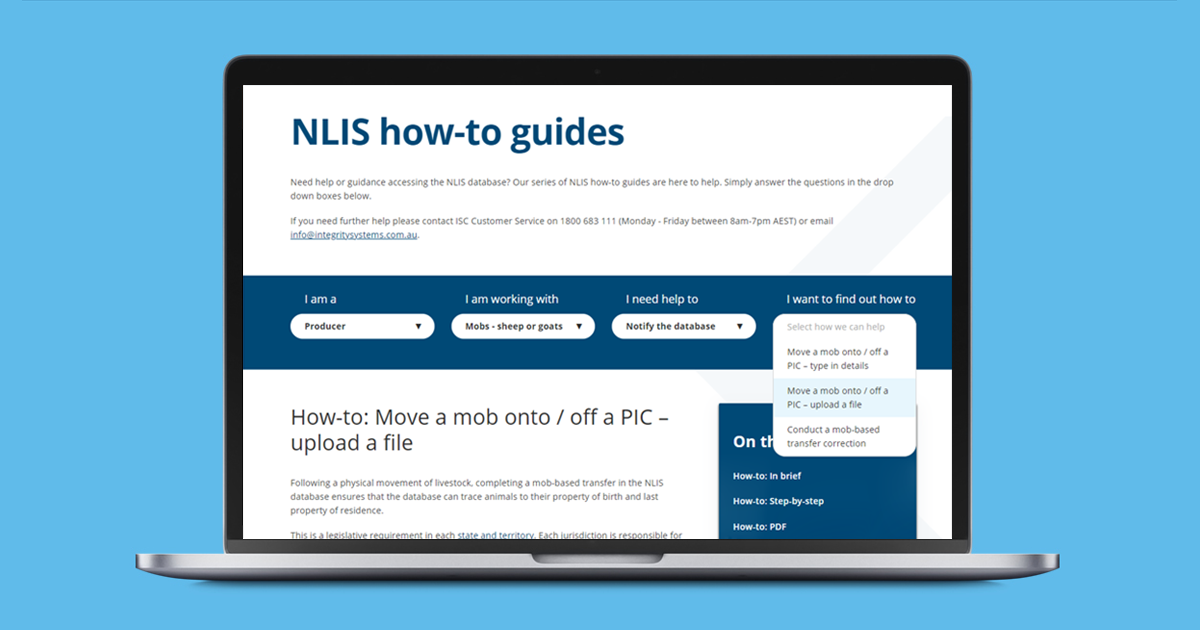
New NLIS how-to guides are available to help you use the NLIS system, so you can stand by what you sell.
Integrity Systems Company delivers the Australian red meat industry’s integrity programs (NLIS, LPA, NVD), and Digital Value Chain strategy.
More information Learn more about the details of the EUDR requirements and the new LPA geolocation tool. Please note: The EUDR is in addition to the existing European Union Cattle Accreditation Scheme (EUCAS), which is administered by the Australian Government’s Department of Agriculture Fisheries and Forestry.
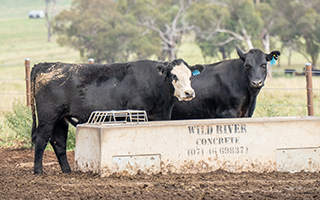
The functionality of the electronic National Vendor Declaration (eNVD) continues to expand and improve – making digital consignments the convenient option when moving your livestock.

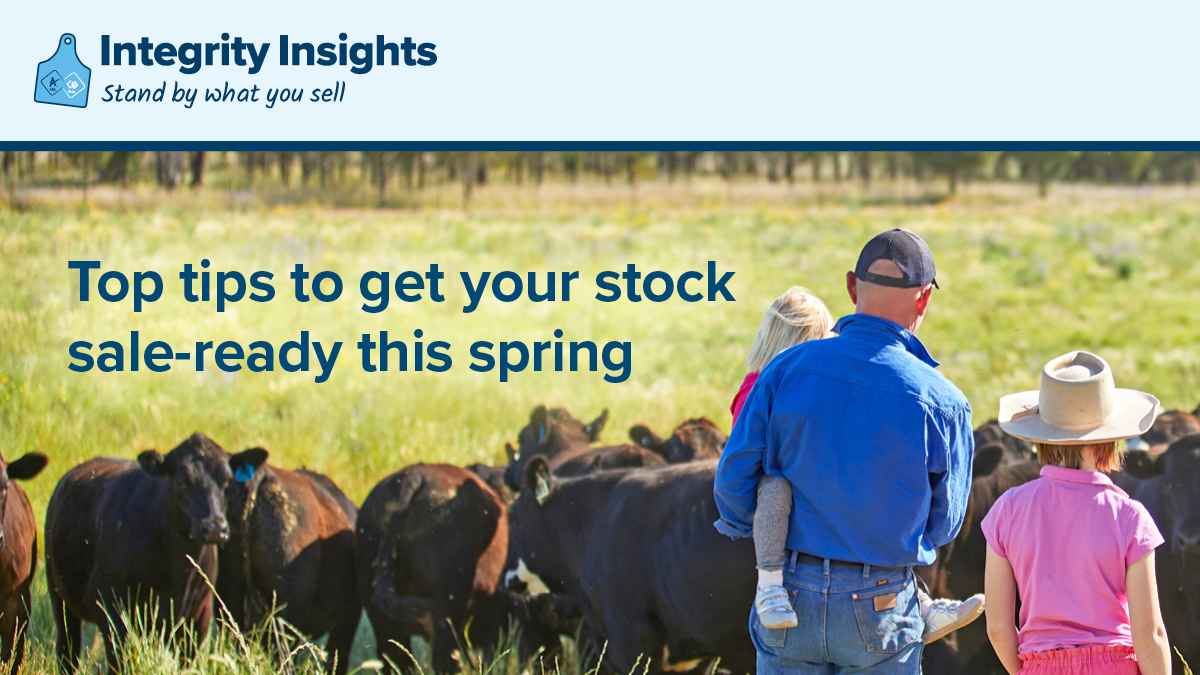
Producers selling livestock this spring selling season must ensure they meet integrity requirements, so their animals are able to be sold.
Learn how to record livestock movements on the online NLIS database – including what you need and when it is your responsibility.