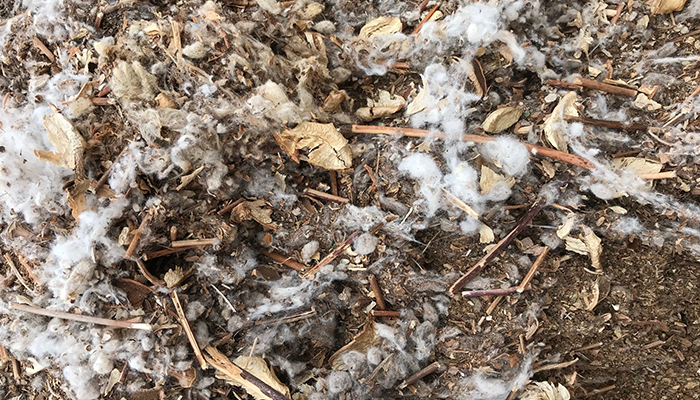
LPA-accredited producers can feed their livestock cotton gin trash or use it as mulch by following a strict industry-developed protocol. This protocol ensures that livestock currently being fed cotton gin trash, or livestock that have previously been fed cotton gin trash, do not enter the food supply chain during the 60-day Export Animal Feed Interval. The protocol requires producers to source cotton gin trash only from approved cotton gins. This will trigger a Cotton Trash Accessed (CTA) status being applied to all livestock on the PIC as well as a Cotton Trash PIC (CTP) status being applied to the PIC on the NLIS database. These measures ensure that livestock fed cotton gin trash continue to meet Australia’s Food Standards, as well as global market requirements. It also allows producers wishing to access cotton gin trash to maintain their LPA accreditation.
Removal of Accessed Cotton Trash status on NLIS
To have a cotton trash status removed from the NLIS, livestock destined for slaughter or live export that have had access to cotton gin trash must graze on clean feed on a PIC clear of cotton gin trash for a minimum of 60 days prior to slaughter or export.
Livestock will only have their cotton gin trash status automatically removed once they have been grazing on a clean PIC for 60 days. This PIC must have NOT had access to cotton gin trash or has been declared clean as outlined above. The clean feed period will commence on the date recorded on the ‘Clean Feed Verification Form’, provided the approved auditor was able to verify that livestock had been grazing on clean feed from the verified date.
The CTP status will only be removed from the PIC when:
- The PIC is free of cotton gin trash, and this has been verified by an approved auditor via the Clean Feed Verification Form; and
- There are no livestock with a CTA status remaining on the PIC (either has been sold or have completed the 60-day verified clean feed period as above).
These statuses allow potential buyers to view any risks associated with the livestock before they are purchased. By querying the status of a PIC or individual animals, buyers can assess whether they are happy to receive consignments of livestock that have been fed cotton gin trash or have been grazing on properties that have acquired cotton gin trash.
Cotton Gin Trash Status Explanation
Please refer to NLIS Terms of Use (Table 14.9)
FAQs
LPA-accredited producers are now able to feed their livestock cotton gin trash or use cotton gin trash as mulch under a strict protocol developed by industry. The availability is dictated by the cotton gins and is only available from gins approved by the cotton industry.
- Read the list of approved cotton gins here.
- Read more about LPA alternative feedstuffs or download a cotton gin trash factsheet for more information.
If livestock that have been fed cotton trash are slaughtered prior to the completion of the clean feed period, there is a risk of chemical residue levels exceeding those stipulated by market access requirements. There are also commercial risks in feeding by-products, like cotton trash, to livestock in that some buyers may not want to purchase such livestock.
- By adhering to the protocol, producers wishing to access cotton trash will be able to maintain their LPA accreditation and the red meat industry will continue to meet the expectations of global markets.
- It is recommended that before feeding cotton trash to livestock, you contact your buyer or processor and receive confirmation that they are willing to accept livestock which have had access to cotton trash.
Access to cotton trash for livestock feed has not been permitted by industry since 2005.This is following issues in the 1980s and 1990s with chemical residues being detected in beef from livestock that had been fed cotton trash or had grazed on farms where cotton was planted and treated with chemicals such as Endosulfan (no longer registered for use in Australia). The protocol has been developed because continued drought across eastern Australia over the past two years has increased pressure on producers to access emergency drought feed for livestock, including cotton trash.
The red meat and cotton industries have amended their MOU to allow cotton trash to be used as a source of livestock feed or mulch by LPA accredited producers from 30 November 2018. These arrangements will remain in place until otherwise determined by the red meat and cotton industries.
The Cotton Trash Accessed (CTA) status will be assigned to all devices and animals registered to your PIC at the time that the PIC status is applied. Any new animals moving onto your PIC while the PIC status is in place, will also be assigned a Cotton Trash Accessed (CTA) status.
- Device based statuses will remain attached to animals indefinitely, unless the animals move off your PIC onto a PIC that has not accessed cotton trash, and in this case, the status will remain attached to the animal for 60 days after the movement date recorded on the NLIS database.
- PIC statuses may also be removed following verification by an Approved Auditor that the animals are grazing on clean feed and cannot access cotton trash during the 60 day clean feed period.
- If the animals are moved off your PIC mid-way through the 60 day period to a PIC with no status, the devices will continue to register the status until the 60 day period is up, at which point the device based status will be automatically removed.
Sheep can be fed cotton trash under the same provisions as cattle.
Livestock must graze on clean feed for a period of 60 days before the status is removed. This clean feed period must be verified by an Approved Auditor. The commencement of the clean feed period can occur prior to the audit being undertaken, providing that the management plan implemented by the producer provides sufficient evidence to substantiate verification that the livestock have been grazing on clean feed from the stated date, by the Approved Auditor.
Independent audits can be completed by an Approved Auditor. Currently AUS-MEAT is the only Approved Auditor for clean feed period audits. Contact AUS-MEAT on telephone 07 3361 9200, fax 07 3361 9222 or email ausmeat@ausmeat.com.au.
The producer will be required to lodge the verification received following the audit with LPA Administration (operations@integritysystems.com.au) within two days of the verification being provided.
This clean feed period must be verified by an Approved Auditor. When the Approved Auditor is contracted is the decision of the producer, although they are encouraged to do so prior to commencing the clean feed period. The commencements of the clean feed period can occur prior to the audit being undertaken, providing that the management plan implemented by the producer provides sufficient evidence to substantiate verification that the livestock have been grazing on clean feed from the stated date, by the Approved Auditor.
Individual auditors set the fees for audits. Currently AUS-MEAT is the only Approved Auditor for clean feed verification audits. Contact AUS-MEAT on telephone 07 3361 9200, fax 07 3361 9222 or email ausmeat@ausmeat.com.au .
The requirements for access to Alternate Feedstuff are a part of the LPA Program Rules. LPA accredited producers are required to adhere to the LPA Program Rules and Standards, including access to Alternate Feedstuff. Cotton trash is classified as an Alternate Feedstuff under the LPA Program Rules and its use will be enforced as a part of the LPA program requirements. Producers acquiring cotton trash will also need to demonstrate how they are adhering to these requirements when selected for random or targeted LPA audits.
A declaration must be completed for every order of cotton trash. Download the declaration.
The protocol has been developed based on a risk assessment undertaken by the government in consultation with the industry. The protocol requires authorised gins to have regular samples of cotton trash tested by the National Residue Survey and only those gins that are meeting the requirements of the protocol will be able to supply cotton trash to producers.Ongoing monitoring of livestock being consigned for slaughter from properties that have accessed cotton trash will be conducted to ensure that any potential residue risks are being effectively mitigated through the protocol.
All producers who are accredited under LPA can be selected for a random audit. Even if you have completed the 60-day clean feed period and submitted a signed Clean Feed Verification Form to LPA Administration, you may still be audited. Some Approved Auditors may conduct a full LPA audit while they are conducting the Clean Feed Verification audit. This is a voluntary audit at no additional cost and would exclude you from the LPA Random Audit Pool for three years. However, it would not exclude you from the LPA Targeted Audit program.
Feeding cotton trash does impact a PIC, even if only some of your livestock have had access, every animal registered to that PIC will be considered to have accessed cotton trash. As a result, all animals registered to that PIC are automatically allocated a cotton trash animal (CTA) status on the central NLIS database. All animals are required to complete a 60-day clean feed period before going to slaughter or export. This can occur in two ways, an approved auditor verifies the PIC is clear and no longer feeding cotton trash via an on-farm audit, or if livestock are moved to a clean PIC, and the 60 day clean feed period will automatically initiate once the movement is recorded on the central NLIS database.