Search tips
- Check your spelling
- Try a different term
- Keep your search term short and simple
With summer approaching, it’s important to obtain a Commodity Vendor Declaration (CVD) from suppliers when purchasing livestock feed. Livestock Production Assurance (LPA) accredited producers are urged to source feed from suppliers who are willing to vouch for its content by providing a CVD. Completed CVDs should be filed with other farm records. The CVD communicates food safety risks of introduced feed and it is needed to keep animals safe from chemical contamination or illness. Managing risks associated with introduced stock feed is a key requirement under the LPA program’s Module 3 ‘Fodder crop, grain and pasture treatments and stock foods’....

As spring marking season approaches, increased pain relief products become available and biosecurity threats converge, livestock producers accredited through Livestock Production Assurance (LPA) are being urged to brush up on their knowledge of safe and responsible administration of animal treatments and record keeping.

Property risk assessments and farm biosecurity plans can now be created digitally online within a producer’s LPA account.

More information Learn more about the LPA program and its seven requirements. Read about LPA learning, accreditation and on farm audits.

Important Update: EUDR information for processors and feedlots Changes have been made to the Livestock Production Assurance (LPA) program and the National Livestock Identification System (NLIS) in response to the upcoming European Union Deforestation Regulation (EUDR) commencing on 31 December 2026. The EUDR aims to limit the EU’s impact on global deforestation, forest degradation and biodiversity loss by promoting deforestation-free supply chains. LPA and European Union Cattle Accreditation Scheme (EUCAS) accredited cattle producers can now ‘opt in’ to share their geolocation data (longitude and latitude coordinates) of where their cattle were raised through their LPA account. ...
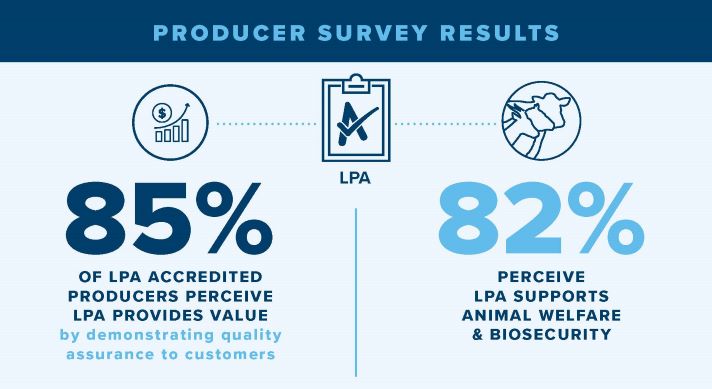
Find out more about our producer research and the high awareness levels of Australia's red meat integrity system.
Cattle that have been treated with HGPs must be identified using a triangular ear punch and the use of HGPs on these animals must be declared on your LPA NVD.
On-farm audits are conducted each year to ensure the management systems introduced by livestock producers are complying with LPA rules and standards.

More information If you’re a small producer looking for guidance on complying with the LPA requirements, register to attend our Small Producer Webinar on Thursday, 21 May at 7pm. To learn more about maintaining lifetime traceability when buying, selling and moving livestock, visit the ISC website. To learn more about LPA requirements for biosecurity, visit the ISC website. For more information about LPA audits, please refer to this factsheet or assess your audit readiness by completing this checklist. If you have any further questions about your LPA accreditation and understanding how it applies to your enterprise, please email lpa@integritysystems.com.au. ...
