Hook tracking to deliver enhanced carcase feedback
In an Australian first, Gundagai Meat Processors (GMP) has successfully implemented a hook tracking system which links the full eating quality and health condition feedback of individual lambs back to their NLIS electronic identification (eID) number.
Using Radio Frequency Identification Device (RFID) readers, GMP can now scan individual RFID chips in the animals’ eIDs and record objective measurement data at chain speed as the carcases move along the plant floor.
While GMP has been providing its Gundagai Lamb producers with objective carcase measurement data – including intramuscular fat, lean meat yield and animal health – since 2021, this new system enables data to be linked back to individual eIDs for the first time.
GMP Supply Chain Manager, Dr Michelle Henry, said the project has been four years in the making, with the dual purpose of enhancing sheep traceability via eID adoption and comprehensively demonstrating the value proposition of full carcase feedback.
"With hook tracking we can now link that data back to the on-farm eID record of individual animals and provide our producers with the most accurate individual carcase feedback available,” Dr Henry said.
Getting the system up and running required a lot of trial and error to find the right solutions.
"In particular, being able to read eID chips in a processing plant has always been a big challenge due to the noise so we just had to be patient and keep working with our technology partner (SCL) until we eventually landed on the right approach.”
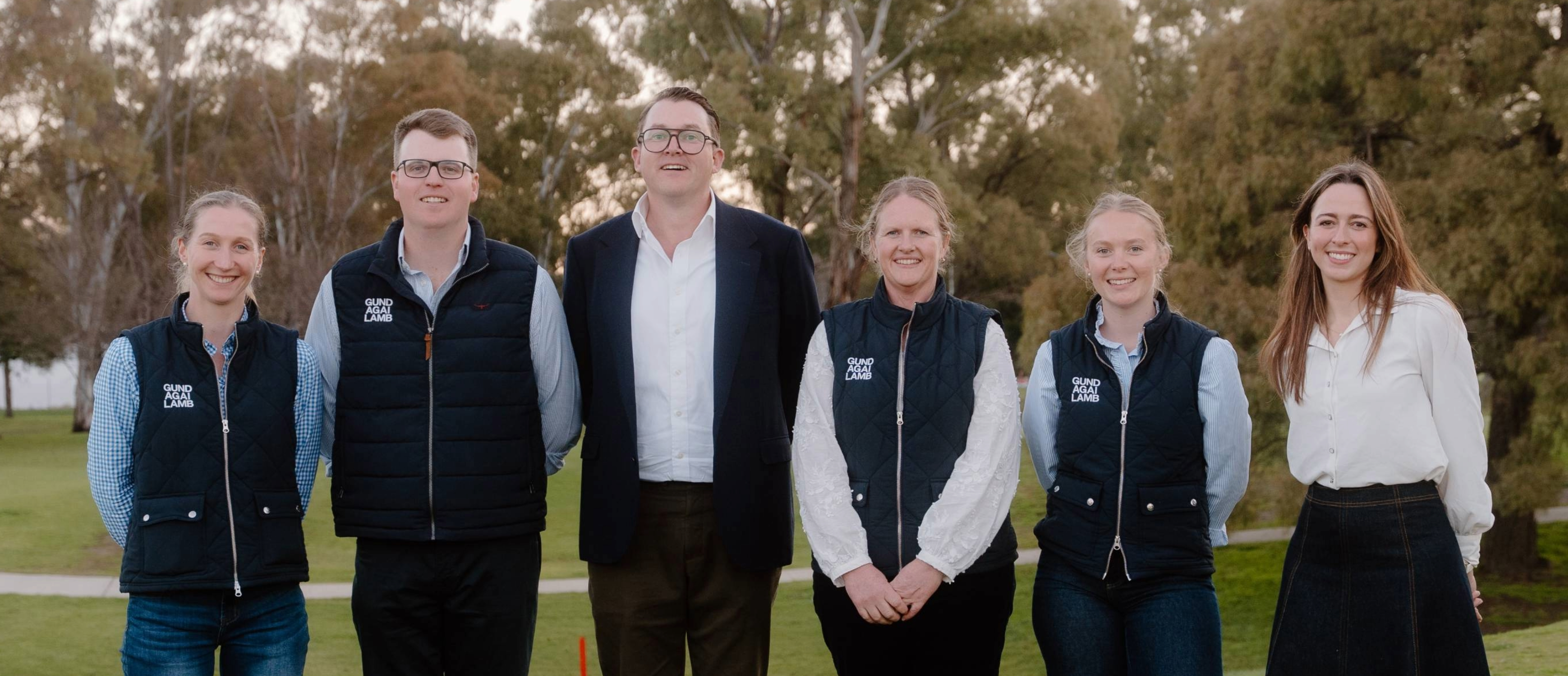
The team behind GMP’s hook tracking project: (L-R) Claire Marriott, Jake Bourlet, Will Barton, Michelle Henry, Emily Stewart, Molly Greentree.
Informed on-farm decision making using eIDs
Dr Henry said that by linking objective measurement data directly to eIDs, producers will be able to assess how their on-farm decision making is impacting their carcase value.
“Depending on their record keeping, producers will be able to look at things such as the nutrition and genetic choices they’ve made and see how these have affected the performance and profitability of their carcases,” Dr Henry said. “They can then make changes based on the clear signals and feedback they are getting from the data.”
Dr Henry said GMP’s Gundagai Lamb brand has always provided animal health data via its producer portal. Now, being able to link this information back to the eID means producers can trace disease detection back to the paddock or genetics level, or even assess the effectiveness of vaccines in certain animals.
Recording basic information, such as the paddocks they lambed down in and whether they were a twin or a single, can start to provide producers with new insights into how these lambs performed at processing .
“Providing data on this level is going to help producers determine what strategies produce the best results – ensuring they are rewarded for the quality of their decision making and the value of the carcase they deliver as a result,” Dr Henry said.
While it may take a few years for these on-farm decisions to translate to outcomes, Dr Henry said this new level of data is going to be an increasingly valuable tool to increase productivity and profitability for producers who are already utilising eIDs effectively on farm. She said it would also be a big incentive for other producers to explore how they can use eIDs in the future.
Responding to consumer demand
Dr Henry said Gundagai Lamb aims to produce a product consumers want to purchase repeatedly because of its quality and consistency.
"We already support our producers’ ability to meet the expectations of our customers via a long-term practice change project, co-funded by MLA and the MLA Donor Company,” she said.
“This project helps Gundagai Lamb producers understand the feedback they receive via the Gundagai Lamb portal and how they can get more value from that carcase feedback,” Dr Henry said.
“The data we now provide is going to enable our producers to make more informed decisions and be better able to meet brand specifications, effectively manage their ability to meet demand throughout the year, and earn a premium for the quality of the lambs they produce.”
“At the end of the day, that’s going to deliver a better, more consistent outcome for the consumer.”
Opportunity for industry
Dr Henry said wider adoption of hook tracking would help ensure the industry was gaining more value along the supply chain, but that the real value for producers will ultimately come down to whether they are implementing the feedback.
“Producers who want to look at how their carcase results line up with on-farm decision making captured to their eIDs have the opportunity to improve their productivity and profitability.”
Further assistance
Learn more about Gundagai Meat Processors and Gundagai Lamb.
Read MLA’s Value Chain Innovation report to learn how MLA continues to invest in and partner with processors to develop a suite of objective measurement tools which are enabling producers to be rewarded for the quality of their meat.
Attend an MLA BredWell FedWell event to learn more about nutrition and genetics strategies.
For more information about electronic identification (eID), please refer to the Integrity Systems website.
If you have any questions, please email info@integritysystems.com.au.
Alternatively, you can speak with the Customer Service team on 1800 683 111, Monday to Friday between 8am and 7pm (AEST) or on weekends between 9am and 5pm (AEST). You can also access the Chatbot seven days a week via our website or from your myMLA, eNVD (web platform) and LPA account pages.